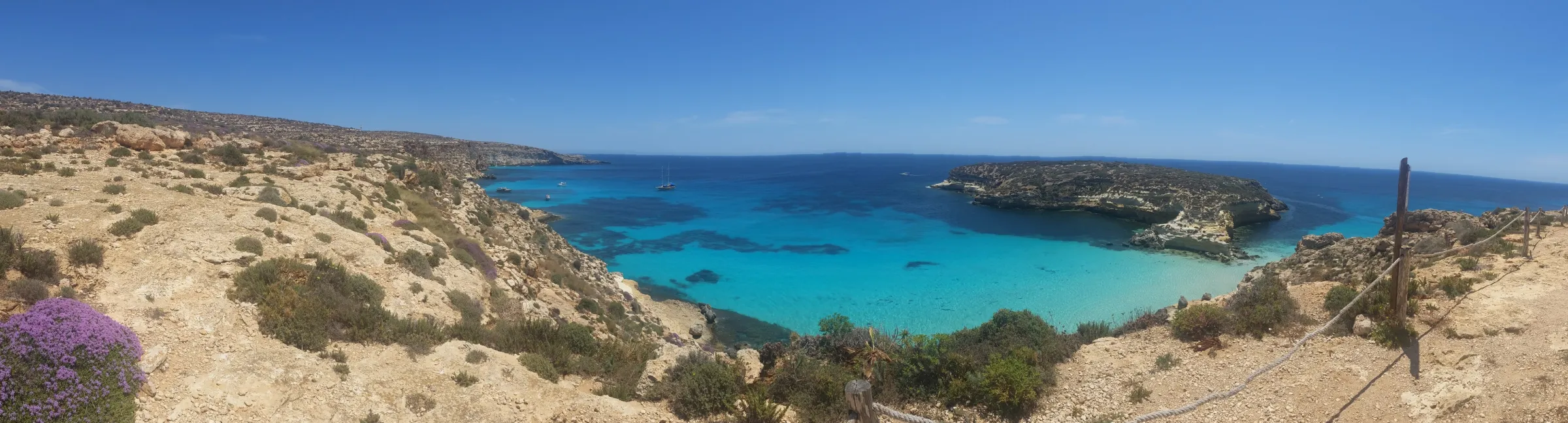
Cala Maluk, small and quiet a few minutes from town
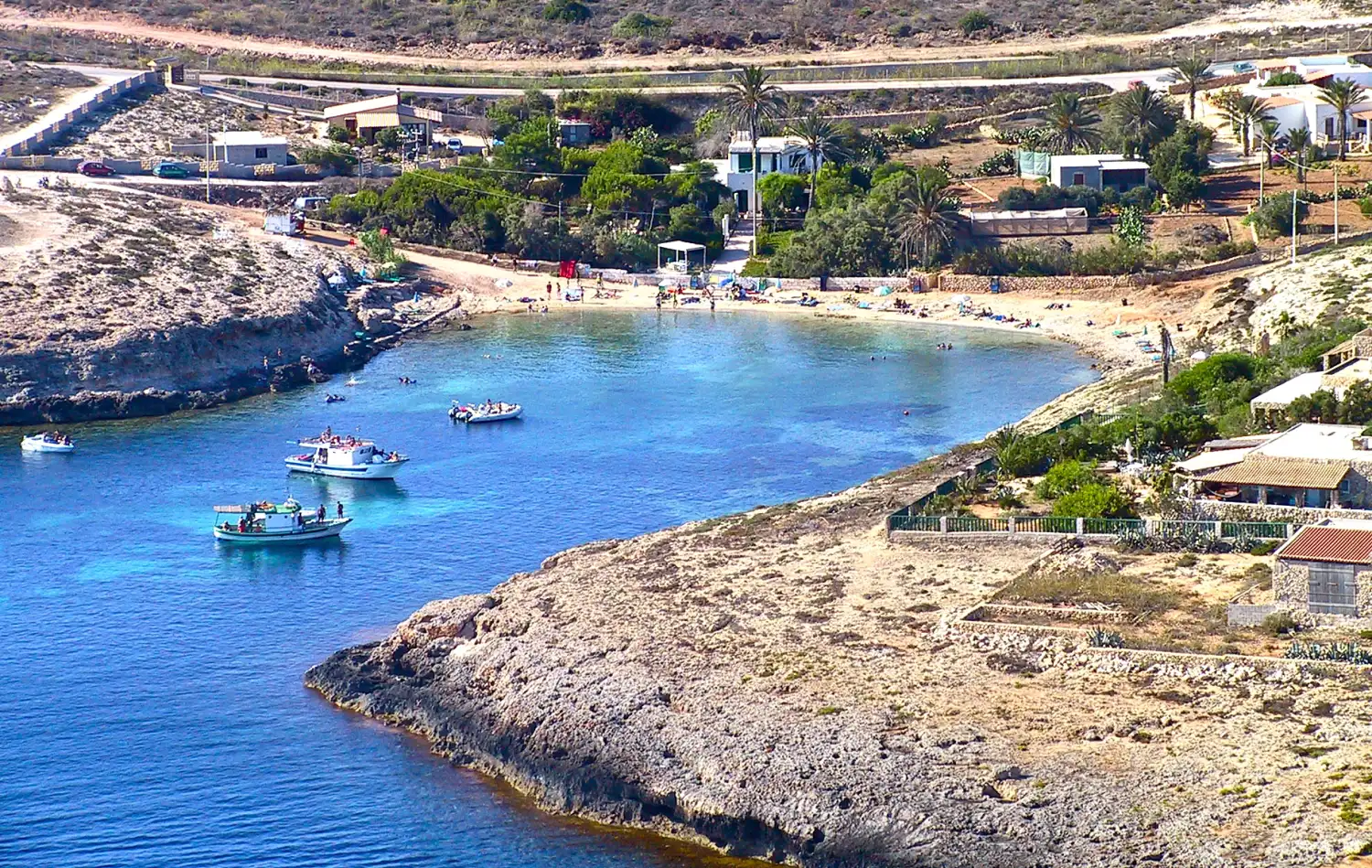
A small cove on the south coast, close to town but off the circuit of the busy beaches. Sand mixed with rock, a rocky entry into the water and few people even in high season.
Tomorrow: sirocco (south-easterly) 8 knots. This cove is exposed, expect waves and cloudy water. Better to switch to Cala Pisana, Cala Creta, Mare Morto. Full wind guide
Cala Maluk sits on the south coast, along the road that leads to the airport and the harbour, a short way out of town. It is one of the closest coves to the centre and at the same time one of the least busy, because it is small, a few dozen metres of sand and rock, and it is not a serviced beach like Guitgia. Anyone after sunbeds, parasols and a wide stretch of sand drives on, which leaves the place to a handful of people at a time, even in the busiest weeks of August.
That is exactly the reason to come. When the mistral (north-westerly) blows, the sea along the south coast flattens out, the water turns still and readable all the way down, and a few minutes by scooter from town put you somewhere genuinely quiet. There is a kiosk nearby, but on the shore itself do not count on shade or on any kit: water, a hat and a towel come from home regardless. This is a cove for people who want calm rather than convenience, and it helps to know that before you set off.
| Access | by car or scooter |
|---|---|
| Distance | 1.5 km from town, 20 minutes on foot |
| Seabed | sand and rock |
| Depth | medium |
| Shade | none |
| Facilities | kiosk |
| Parking | limited |
| With children | with care |
| Snorkeling | good |
| Sheltered from | northerly (tramontana), mistral (north-westerly), westerly (ponente) |
| Exposed to | southerly (ostro), sirocco (south-easterly), easterly (levante) |
Getting there
- From town, take the road that runs along the south side of the airport, the same one heading for the harbour and the ferry pier.
- The trip is short, a few minutes by car or scooter, or an easy walk along a road that has almost no shade.
- Parking is whatever fits at the roadside and there is not much of it: do not block private entrances and do not leave your vehicle on a bend.
- The last stretch down to the water is on foot over rough rock with no signposting, so take it slowly and wear closed shoes.
The water and getting in
The bottom is mixed, strips of pale sand between low slabs of rock, and the sand never builds into the wide flat beach you get at Cala Croce. Getting in is the part that catches people out. The rocks are smooth and slippery with algae in places, and the shallows do not last long, after a few metres you are out of your depth. None of this is dangerous, but it has to be done at walking pace rather than at a run.
Pick your entry point before you undress, not after. Look for a gap of sand or a flat slab where the water rises gently, and remember it, because on the way out, once you are tired, it matters more than you would expect. If the sea is not perfectly flat, get in and out at the same spot every time. Put your fins on in the water, not on the rocks, where they turn every step into a pointless risk.
What you see through a mask
Snorkelling is the best reason to come out here. The seabed alternates rock, tufts of posidonia and patches of sand, and that variety is exactly what concentrates the life: damselfish hanging over the rocks, sea bream and saddled bream along the edges, salema grazing in the meadow, the odd mullet close to shore. Do not expect the shoals people see from a boat at Tabaccara, but with still water the visibility is excellent and three or four metres from the shore is enough. You are inside the Pelagie Marine Protected Area, so look without touching and take nothing away.
The wind decides whether you go
Maluk faces south, so it is sheltered when the wind comes from the north, north-west or west. The mistral (north-westerly), the dominant summer pattern, works in your favour here: cool air, flat sea, clear water. It is exposed to the east, south-east and south, and with a sirocco (south-easterly) or an easterly levante the swell rolls straight into the cove, the rocky entry turns awkward and underwater visibility collapses. On days like that it makes more sense to move to the east side, towards Cala Pisana or Cala Creta. Check the wind forecast the evening before, as you would for any beach on the island.
What to bring, even though town is close
The short distance is deceptive. Once you are down at the water there is no shade and no shelter, and in high summer you want at least a litre and a half of water per person, plus a hat and sunscreen to reapply. Reef shoes are not a luxury here but the kit that lets you get into the water without thinking about it. Add a thick towel that works on an uneven slab, a mask, and a bag to carry your rubbish out. For anything else there is a kiosk nearby, but check on the spot, because opening days and times shift with the season.
Come in the morning, with the mistral
The combination that makes Maluk a good day is a simple one, a mistral in the forecast and an arrival before ten, while the sun is still low, the rock is cool underfoot and you can choose your spot. By early afternoon the light is straight overhead, there is no shade whatsoever and the climb back to the road makes itself felt.
Think twice with very young children
There is no lifeguard here and the bottom drops away a few metres from shore, over rocks that can be slippery. With children who cannot swim yet, Guitgia or Cala Madonna remain the sensible choice. If you come anyway, put armbands or a buoyancy jacket on before you reach the water, reef shoes on their feet, one adult in the sea per child, and no running on wet rock.
Where Cala Maluk is
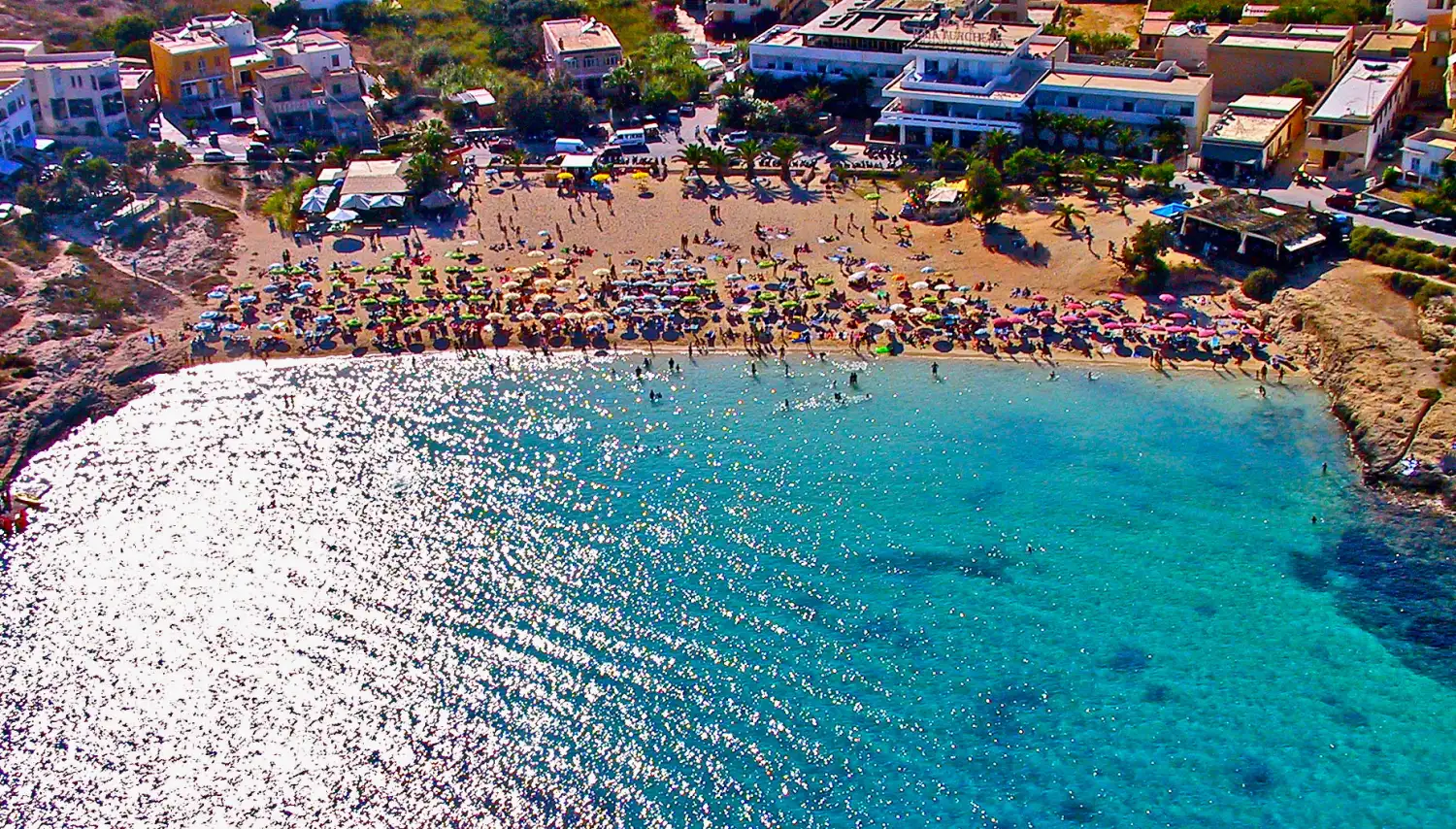
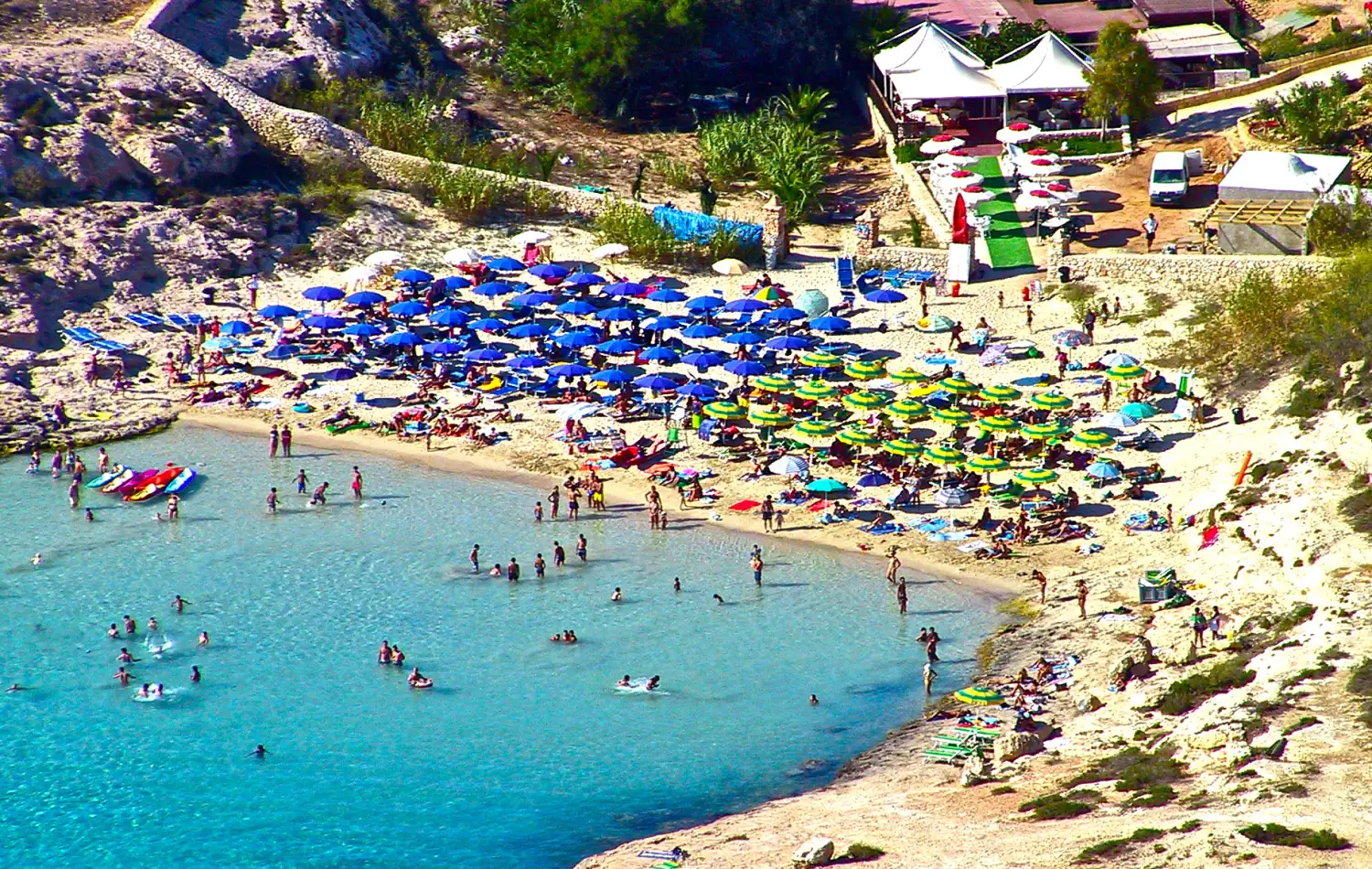
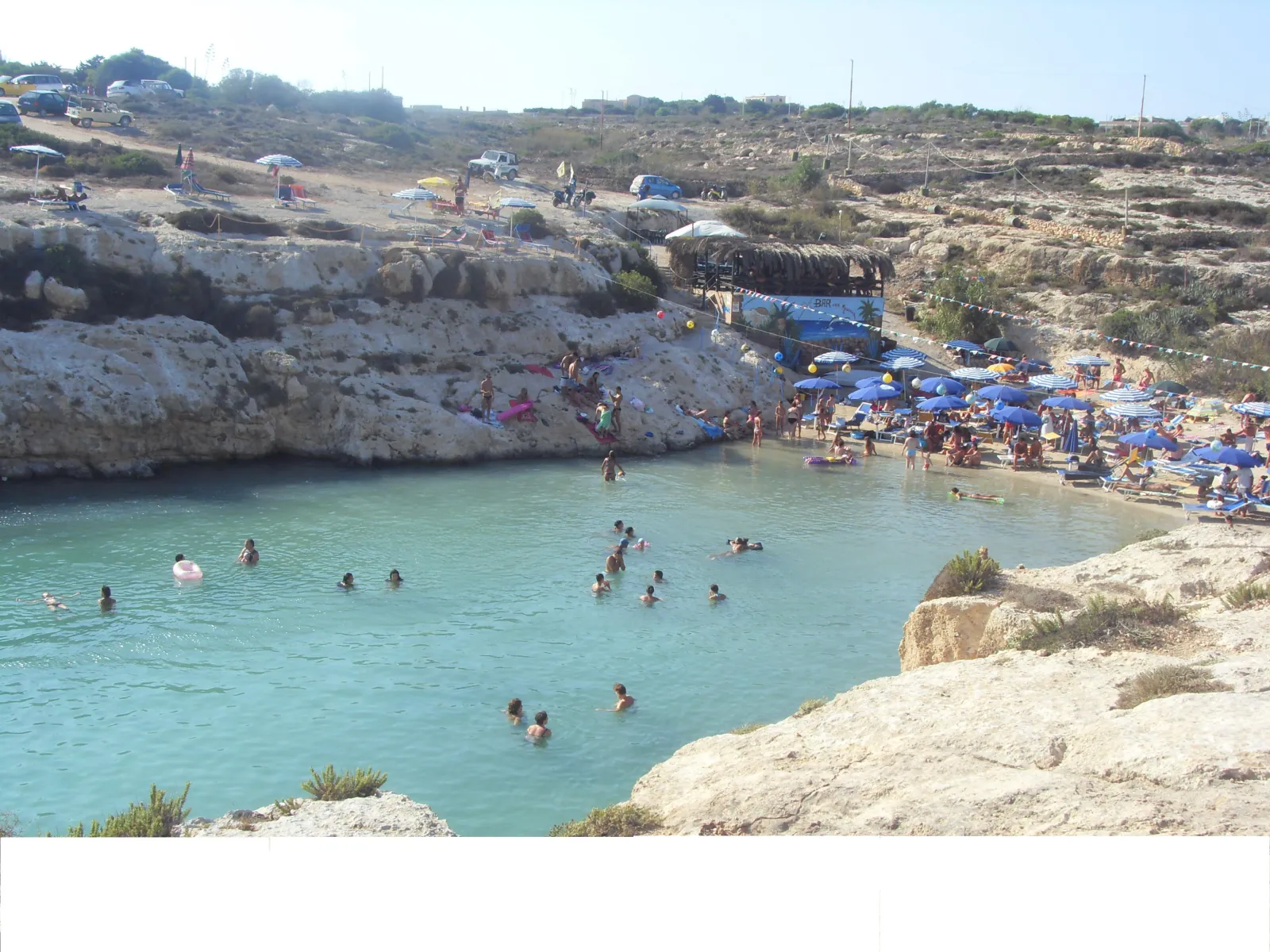
Nearby coves
Frequently asked questions
Are there sunbeds and parasols at Cala Maluk?
It is not a serviced beach like Guitgia: down on the shore there is no shade and nothing to hire. There is a kiosk nearby, but its opening days and times vary with the season, so check on the spot and set off with water, a hat and a bag for your rubbish anyway.
Can you walk there from town?
Yes, and it is one of the easiest coves to reach, a short walk from town along the road that skirts the airport. In July and August, though, almost the whole route is unshaded, so either set off early in the morning or take a scooter, which gets you there in no time. Roadside space to stop is limited.
Is it suitable for children?
It depends on their age. With older children who swim confidently it is a fun cove, with a mask and reef shoes. With very young ones it is less suitable: the bottom drops away close to shore, the rocks are slippery, there is no shade and no lifeguard. In that case Guitgia and Cala Madonna are a better fit.
When is the best time to go?
On days with a mistral, arriving early in the morning. The north-westerly keeps the sea flat along the south coast and the water stays clear, while in the morning the rock is still cool and finding a spot is effortless. June and September are the best months of all, with good light and very few people.
Is it worth bringing a mask and fins?
Yes, that is the main reason this cove is worth the detour. The mix of rock, posidonia and sand holds a lot of life within a few metres of the shore, and in calm conditions visibility is excellent. Fins help but are not essential: if you bring them, put them on in the water rather than on the rocks.